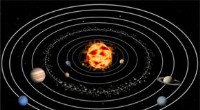
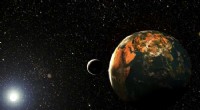
1. The Early Solar System: The young Sun was surrounded by a swirling disk of gas and dust. As this material clumped together, planets started forming.
2. Proto-Earth: Earth was forming, growing larger through collisions with smaller planetesimals.
3. The Impact: A Mars-sized object, called Theia, slammed into the proto-Earth at a glancing blow. This collision was incredibly violent, releasing immense energy.
4. Formation of the Moon: The impact ejected a massive amount of material from Earth's mantle into space. This debris coalesced in orbit around Earth, eventually forming the Moon.
Evidence Supporting the Giant Impact:
* Lunar Composition: The Moon's composition is surprisingly similar to Earth's mantle, supporting the idea that it formed from Earth's material.
* Moon's Orbit: The Moon's orbit is tilted relative to Earth's equator, which is unusual for a satellite and suggests a violent formation.
* Moon's Low Iron Content: The Moon has a much lower iron content compared to Earth, hinting at the impact stripping away a significant amount of iron from the proto-Earth.
* Computer Simulations: Computer models have successfully simulated the Giant Impact, producing a Moon with similar properties to our own.
Important Note: The Giant Impact Hypothesis is the most widely accepted theory, but there are still ongoing debates and research about the precise details of the formation.
Scientists continue to study the Moon and Earth, gathering data to refine our understanding of how these celestial bodies came to be.