Here's the breakdown:
* Milky Way Galaxy:
* The Big Picture: Our solar system is a tiny part of the Milky Way, a vast collection of billions of stars, gas, dust, and other celestial objects.
* Providing a Home: The Milky Way's gravity holds our solar system together, preventing it from drifting off into interstellar space.
* Cosmic Neighborhood: The galaxy provides a diverse environment with other star systems, nebulae (star-forming regions), and various cosmic events.
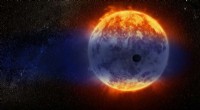
* Sun:
* Life's Source: The Sun is a giant ball of burning gas that provides light and heat, essential for life on Earth.
* Gravity's Grip: The Sun's gravity holds all the planets in our solar system in orbit around it.
* Solar Wind: The Sun constantly releases a stream of charged particles (solar wind) that can influence the Earth's atmosphere and magnetic field.
* Planets:
* Diverse Worlds: Each planet in our solar system has unique characteristics, from rocky planets like Earth to gas giants like Jupiter.
* Orbiting the Sun: All planets revolve around the Sun in elliptical orbits, determined by the Sun's gravity.
* Interaction and Influence: Planets interact with each other gravitationally, causing slight perturbations in their orbits. Some planets, like Jupiter, have significant influence on the orbits of smaller bodies in the solar system.
In a nutshell:
The Milky Way galaxy provides the overall framework for our solar system. The Sun is the central star, providing light, heat, and gravitational control. The planets are diverse celestial bodies orbiting the Sun, each playing a unique role within the solar system's dynamic environment.