1. Formation from a Rotating Disk:
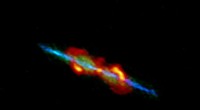
* The solar system formed from a rotating disk of gas and dust called the solar nebula. This disk was denser towards the center, where the Sun eventually formed.
2. Condensation and Accretion:
* As the nebula cooled, different materials condensed at different distances from the Sun:
* Inner Regions (Terrestrial Planet Zone): The intense heat from the young Sun vaporized lighter elements like hydrogen and helium. Only heavier elements like iron, nickel, silicon, and oxygen remained, forming rocky planetesimals.
* Outer Regions (Jovian Planet Zone): Further away from the Sun, temperatures were colder, allowing lighter elements (hydrogen, helium, methane, ammonia) to condense into icy planetesimals.
3. Accretion and Growth:
* Both types of planetesimals started accreting (growing) through collisions.
* Terrestrial Planets: The smaller, denser planetesimals in the inner region formed the rocky planets (Mercury, Venus, Earth, Mars).
* Jovian Planets: The larger, lighter planetesimals in the outer region formed the gas giants (Jupiter, Saturn, Uranus, Neptune).
4. Gravitational Dominance:
* The Jovian planets, with their massive icy cores and the ability to hold onto lighter elements, exerted a powerful gravitational pull. This allowed them to capture and accumulate vast amounts of gas (hydrogen and helium) from the surrounding nebula.
5. Density Differences:
* Terrestrial Planets: Dense, rocky planets composed of heavier elements like iron, nickel, silicon, and oxygen.
* Jovian Planets: Less dense, gas-rich planets composed mostly of hydrogen and helium with smaller, icy cores. This results in their significantly lower densities compared to terrestrial planets.
In summary:
The solar nebula theory explains the density difference by the combination of:
* Condensation: Different elements condensed at different distances from the Sun due to temperature gradients.
* Accretion: Planetesimals grew by collisions, forming planets.
* Gravitational Dominance: Jovian planets captured vast amounts of gas due to their massive cores and strong gravity.
This resulted in the rocky, dense terrestrial planets in the inner solar system and the gas-rich, less dense jovian planets in the outer solar system.