The Surveyor and Apollo missions were critical steps in humanity's exploration of the Moon. They had different primary goals, but both contributed significantly to our understanding of Earth's natural satellite.
Surveyor Missions (1966-1968):
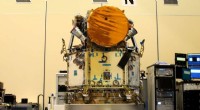
* Primary Goal: To test landing techniques and analyze the lunar surface for potential Apollo landing sites.
* Key Achievements:
* Soft-landing on the Moon, demonstrating the feasibility of landing humans.
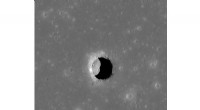
* Gathering detailed images and data about the lunar surface, including its composition and topography.
* Testing instruments for potential use in future lunar missions.
Apollo Missions (1969-1972):
* Primary Goal: To land humans on the Moon and return them safely to Earth.
* Key Achievements:
* First human landing on the Moon (Apollo 11, 1969).
* Collecting lunar samples for analysis. This was a major scientific contribution, providing vital information about the Moon's history, composition, and geological processes.
* Conducting experiments on the lunar surface. Astronauts deployed seismometers, laser reflectors, and other instruments to study the Moon's geology, atmosphere, and magnetic field.
* Taking panoramic photographs and videos of the lunar landscape. These images helped to create a detailed and comprehensive picture of the Moon's surface.
How these Missions Furthered Scientific Studies of the Moon:
* Surface Composition: The Surveyor and Apollo missions provided crucial data about the Moon's surface composition, revealing its primarily rocky and dusty nature. They identified various minerals, confirming earlier theories about the Moon's origins.
* Geological History: The samples collected by the Apollo missions allowed scientists to piece together the Moon's geological history, including its volcanic activity, impact craters, and evolution over billions of years.
* Internal Structure: The seismometers deployed during the Apollo missions helped scientists understand the Moon's internal structure, revealing its core, mantle, and crust.
* Origins and Evolution: The data gathered from these missions supported theories about the Moon's formation, likely a result of a giant impact between Earth and a Mars-sized object.
The Impact:
The Surveyor and Apollo missions revolutionized our understanding of the Moon. They provided vital data for studying its composition, geology, and internal structure, leading to breakthroughs in our understanding of the Moon's formation and evolution. These missions paved the way for future lunar exploration and continue to inspire scientists to unravel the Moon's mysteries.