However, I can give you a good overview of the *types* of space probes currently active, with a few prominent examples:
Types of Space Probes:
* Planetary Missions: These probes explore planets, moons, and other objects within our solar system.
* Examples:
* Voyager 1 & 2: Traveling beyond our solar system, studying interstellar space
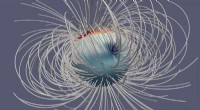
* Juno: Orbiting Jupiter and studying its atmosphere and magnetic field
* Cassini: Orbited Saturn for 13 years, studying its rings and moons
* Perseverance: On the surface of Mars, searching for signs of past life
* Parker Solar Probe: Orbiting the Sun, studying its corona
* Solar Missions: These probes focus on studying the Sun and its activity.
* Examples:
* Solar Orbiter: Orbiting the Sun, studying its magnetic field and solar wind
* SOHO (Solar and Heliospheric Observatory): Studying the Sun from a Lagrange point
* Astrophysics Missions: These probes study distant objects like stars, galaxies, and the cosmic microwave background radiation.
* Examples:
* Hubble Space Telescope: Orbiting Earth, capturing images of distant galaxies and nebulae
* James Webb Space Telescope: Orbiting a Lagrange point, studying the early universe and exoplanets
* Chandra X-ray Observatory: Orbiting Earth, studying high-energy objects like black holes and supernovae
* Earth Observation Missions: These probes study Earth's environment, climate, and natural resources.
* Examples:
* Landsat: Orbiting Earth, providing data for agriculture, forestry, and urban planning
* GOES (Geostationary Operational Environmental Satellites): Providing weather forecasts and monitoring space weather
To get an up-to-date list of active space probes, you can check resources like:
* NASA's website: https://www.nasa.gov/
* Space.com: https://www.space.com/
* Wikipedia's list of space probes: https://en.wikipedia.org/wiki/List_of_space_probes
Remember: The world of space exploration is constantly evolving, so keep checking these sources for the latest information on active space probes.