1. The Beginning:
* The Nebular Hypothesis: This theory suggests our solar system started as a giant cloud of gas and dust (mostly hydrogen and helium) called a solar nebula.
* Gravitational Collapse: This cloud began to collapse under its own gravity, spinning faster and faster. This created a central, denser region where the Sun was born.
2. Formation of the Protoplanetary Disk:
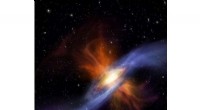
* Leftover Material: After the Sun formed, there was still a lot of leftover material swirling around it. This material, mostly dust and gas, flattened into a spinning disk called a protoplanetary disk.
3. Accretion Begins:
* Dust Grains: The disk contained tiny dust grains, which began to collide and stick together due to static electricity and gravity. These clumps grew over time.
* Planetesimals: As these clumps got bigger, they attracted more particles, eventually becoming larger objects called planetesimals. These were the building blocks of planets.
4. Planet Formation:
* Gravity and Collisions: As planetesimals grew, their gravity pulled in more material, leading to even more collisions and growth. This process continued until the planets reached their current sizes.
* Differentiation: As planets grew, their interiors heated up due to gravitational pressure and radioactive decay. This caused heavier elements to sink to the core while lighter elements floated to the surface.
5. Cleaning Up the Disk:
* Leftover Material: The protoplanetary disk contained a lot of leftover material that didn't get incorporated into planets. This leftover material either got ejected out of the solar system, or formed smaller objects like asteroids and comets.
Important Notes:
* Planetary Diversity: The process of planet formation isn't the same for every planet. The composition of the protoplanetary disk, the distance from the Sun, and other factors played a role in shaping each planet's unique characteristics.
* Ongoing Research: Scientists are constantly studying the formation of planets, both in our solar system and around other stars. New discoveries are constantly refining our understanding of this fascinating process.
This is a simplified explanation. The process of planet formation is complex and involves many factors. However, this gives you a basic understanding of how the planets in our solar system came to be.