Here's why:
* Earth's Atmosphere: The Earth's atmosphere absorbs most infrared radiation, making it very difficult to study from ground-based telescopes. This is why space telescopes like Spitzer, Herschel, and the James Webb Space Telescope have been so successful.
* Ground-Based Infrared Astronomy: However, there are some ways to overcome this hurdle:
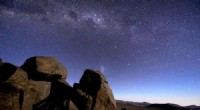
* High-Altitude Observatories: Observatories located at high altitudes, like Mauna Kea in Hawaii, have thinner atmospheres and experience less atmospheric interference.
* Specific Wavelengths: Some infrared wavelengths can penetrate the atmosphere relatively well. Astronomers use special filters and instruments to focus on these "windows" in the infrared spectrum.
* Adaptive Optics: This technology helps correct for atmospheric distortions, improving the quality of ground-based infrared observations.
So, while space telescopes provide the best possible infrared observations, ground-based infrared astronomy is still a valuable tool for certain types of research.