The Challenges:
* Extreme Environment: The sun's environment is incredibly hostile. The intense radiation, solar flares, and extreme temperatures would pose significant threats to human life and spacecraft integrity.
* Distance and Travel Time: The sun is 93 million miles away. Reaching it would require a substantial amount of fuel and a very long journey. Even with advanced propulsion systems, the travel time would likely be months, if not years.
* Shielding and Life Support: Protecting astronauts from the sun's radiation would require incredibly robust shielding, and life support systems would need to be self-sustaining for the duration of the mission.
* Cost: A manned mission to the sun would be immensely expensive, requiring significant investments in technology, infrastructure, and ongoing support.
The Benefits:
* Direct Observation and Experimentation: Human scientists could directly observe the sun's activity, conduct experiments, and gather data that would be impossible for robotic missions alone.
* Flexibility and Adaptability: Human crews offer adaptability and the ability to react to unforeseen events or opportunities. They can make decisions in real-time and modify experiments based on observations.
* Enhanced Public Interest: A manned mission to the sun would likely capture the imagination of the public, generating widespread interest in science and space exploration.
Current and Future Missions:
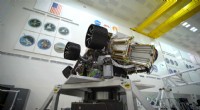
* Parker Solar Probe: This robotic spacecraft is currently orbiting the sun, getting closer than any previous probe and sending back invaluable data.
* Solar Orbiter: A joint ESA/NASA mission, Solar Orbiter is studying the sun's poles and taking high-resolution images of the star.
The Future of Manned Solar Missions:
While a manned mission to the sun remains a distant possibility, it's not entirely out of the question. Future technological advancements in propulsion, shielding, and life support systems could eventually make such a mission feasible.
Conclusion:
Sending humans to the sun presents significant challenges, but the potential scientific rewards are immense. The feasibility of such a mission is dependent on future technological breakthroughs and careful consideration of the risks and benefits. It's a concept that continues to spark scientific curiosity and pushes the boundaries of what we can achieve in space exploration.