1. Absorption and Scattering of Light:
* Atmospheric Gases: Gases in the atmosphere, like oxygen, nitrogen, and water vapor, absorb certain wavelengths of light, particularly in the infrared and ultraviolet regions. This means that these wavelengths never reach telescopes on the ground.
* Aerosols: Tiny particles suspended in the air, like dust and smoke, scatter light, blurring images and reducing contrast. This scattering is more pronounced at shorter wavelengths (blue light), making blue stars appear fainter.
2. Turbulence:
* Air Movement: The atmosphere is constantly in motion, with air currents and temperature variations creating pockets of air with different densities. This unevenness causes light from celestial objects to bend and refract in different ways, leading to twinkling of stars.
* Seeing: This phenomenon, known as "seeing," results in blurred and distorted images, limiting the resolution of ground-based telescopes.
3. Light Pollution:
* Artificial Light: Artificial light from cities, streetlights, and other sources can significantly increase the background brightness of the night sky, making it difficult to observe faint celestial objects.
How Telescopes Mitigate These Effects:
To overcome these atmospheric limitations, astronomers employ various techniques:
* Adaptive Optics: This technology uses deformable mirrors to compensate for atmospheric distortions in real-time, improving image quality significantly.
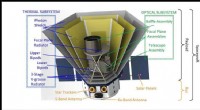
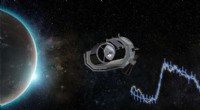
* Space Telescopes: Placing telescopes in space, like the Hubble Space Telescope, completely eliminates atmospheric interference, allowing for much sharper and clearer observations.
* High-Altitude Observatories: Building observatories on mountain tops, above much of the atmosphere, reduces scattering and absorption effects.
* Specialized Filters: By using filters that block specific wavelengths of light absorbed by atmospheric gases, astronomers can observe objects in those regions.
In conclusion, the Earth's atmosphere poses significant challenges to ground-based telescopes, but advancements in technology and careful observation techniques help mitigate these effects, enabling astronomers to explore the cosmos with increasing detail and accuracy.