Telescopic Observations:
* Earth-based telescopes: Since ancient times, telescopes have been used to observe the Moon's surface, track its phases, and measure its size and distance. Modern telescopes with advanced imaging capabilities have allowed scientists to map the Moon's surface in detail, identify craters, mountains, and other features.
* Space-based telescopes: Telescopes in orbit around Earth, like the Hubble Space Telescope, offer a clearer view of the Moon, free from atmospheric distortion. They have provided high-resolution images and spectroscopic data, revealing information about the Moon's composition and surface properties.
Spacecraft Missions:
* Flybys: Early missions like Lunar Orbiter and Mariner 4 flew past the Moon, capturing images and gathering data on its surface.
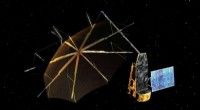
* Orbiters: Missions like Lunar Reconnaissance Orbiter (LRO) have orbited the Moon for extended periods, creating detailed maps and studying the Moon's gravity, magnetic field, and surface composition.
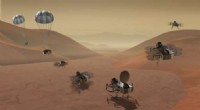
* Landers: Missions like Surveyor and Luna landed on the Moon's surface, taking close-up images, analyzing the soil, and conducting experiments.
* Rovers: Missions like the Apollo missions (with the Lunar Roving Vehicle) and the Chinese Yutu rover have explored the Moon's surface, taking samples, conducting experiments, and providing real-time data.
* Sample Return: The Apollo missions brought back lunar samples to Earth, which have been studied extensively in labs.
Other Methods:
* Laser Ranging: By bouncing laser beams off reflectors placed on the Moon by Apollo missions, scientists can precisely measure the Earth-Moon distance, helping them understand lunar motion and the structure of the Earth's interior.
* Radio Telescopes: Radio waves emitted from the Moon can reveal information about its composition, internal structure, and interaction with the solar wind.
Current and Future Missions:
* Artemis Program: NASA's Artemis program aims to return humans to the Moon, establish a sustainable presence, and conduct further scientific exploration.
* Commercial Space Missions: Private companies like SpaceX are developing lunar landers and rovers, contributing to the ongoing study of the Moon.
Through these various methods, scientists continue to learn more about the Moon's origin, evolution, geology, composition, and potential resources, furthering our understanding of the Moon and its place in the solar system.