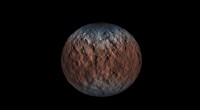
* Early Mars: Billions of years ago, Mars likely had a thicker atmosphere, possibly even thicker than Earth's. This was due to volcanic activity releasing gases and a stronger magnetic field protecting it from the solar wind.
* Loss of Atmosphere: Over time, Mars lost its magnetic field, making it vulnerable to the solar wind. The solar wind stripped away much of the atmosphere, leaving it with a very thin layer.
* Composition: Mars' atmosphere is mostly composed of carbon dioxide (95.32%), with small amounts of nitrogen (2.7%), argon (1.6%), oxygen (0.13%), and other trace gases. This is very different from Earth's atmosphere, which is primarily nitrogen and oxygen.
* Thinness: The atmospheric pressure on Mars is only about 1% of Earth's, making it incredibly thin. This means there's not enough air to breathe, and it contributes to the cold temperatures.
In summary, while Mars has an atmosphere, it's significantly thinner and different from Earth's due to its loss of a magnetic field and the stripping away of atmospheric gases by the solar wind.