Here are some key features of triple star systems:
* Stability: Triple star systems can be quite stable, with the stars orbiting each other in a predictable pattern. However, the dynamics of three bodies can be complex, and some triple star systems are unstable, leading to one or more stars being ejected from the system.
* Types of orbits: The stars in a triple star system can orbit each other in a variety of configurations. The most common type is a hierarchical system, where two stars orbit each other closely, and this pair orbits a third star at a greater distance.
* Variety: Triple star systems can vary greatly in size, mass, and age. Some triple star systems are made up of small, faint stars, while others are composed of massive, bright stars.
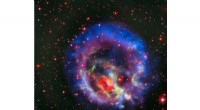
* Evolution: Triple star systems can evolve in complex ways. The interaction between the stars can lead to mass transfer, tidal interactions, and even supernova explosions.
* Examples: Some famous examples of triple star systems include:
* Alpha Centauri: The closest star system to our own Sun, consisting of Alpha Centauri A, Alpha Centauri B, and Proxima Centauri.
* Polaris: The North Star, which is actually a triple star system.
Studying triple star systems helps us understand:
* Stellar evolution: How stars form, evolve, and interact with each other.
* Gravity: The complex interplay of gravitational forces in multiple-star systems.
* Exoplanet formation: The possibility of planets forming in triple star systems, and the conditions under which they could be habitable.
Triple star systems are fascinating objects that provide valuable insights into the workings of the universe.