Here's a breakdown:
* Optical Telescopes: Early telescopes, like those built by Galileo, opened up the possibilities of observing distant stars and planets. However, they were limited by their size and the Earth's atmosphere.
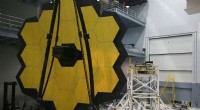
* Larger Telescopes & Observatories: Over time, telescopes became much larger and more sophisticated. This allowed them to gather more light from distant objects, revealing fainter and farther away galaxies. The construction of observatories in remote locations with clear skies, like Mauna Kea in Hawaii, further enhanced this ability.
* Space Telescopes: Launching telescopes like the Hubble Space Telescope into orbit above Earth's atmosphere eliminated atmospheric distortion, providing crystal-clear images and allowing us to see even farther into the universe.
* Advanced Imaging Techniques: Developments in digital imaging, adaptive optics, and other technologies further enhanced our ability to capture and analyze faint light from the distant universe.
In addition to telescopes, the understanding of physics and astronomy played a vital role. Scientists developed methods to interpret the light we receive from distant galaxies, allowing us to understand their age, distance, composition, and other properties.
So, it's not just one invention, but a continuous evolution of technology, understanding, and scientific endeavor that allowed us to peer billions of light years into the universe.