Appearance:
* Invisible to the naked eye: Neutron stars are far too small to be seen with the naked eye, even through powerful telescopes. Their size is often compared to a city, but they have a mass comparable to our sun.
* Detected through various emissions: Astronomers detect neutron stars primarily through the following:
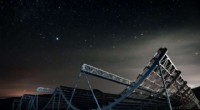
* Radio waves: Some neutron stars emit intense radio waves, creating pulsars. These pulses of radiation sweep across Earth like a lighthouse beacon, allowing us to detect them.
* X-rays and gamma rays: Other neutron stars are highly energetic and release powerful X-rays and gamma rays. These emissions can be detected by specialized telescopes.
* Optical light: Some neutron stars can be seen in optical wavelengths, appearing as faint points of light.
Appearance Compared to Other Celestial Objects:
* Denser than anything else: Neutron stars are incredibly dense, packing a mass equivalent to our sun into a space the size of a city. This density is far greater than any other known object in the universe.
* Strong magnetic fields: Neutron stars have the most powerful magnetic fields known, billions of times stronger than Earth's. These fields influence the emissions of the neutron star, giving them their unique characteristics.
* No visible surface: Unlike stars, neutron stars don't have a visible surface that we can observe. Their structure is a super-dense core with a thin atmosphere, making them appear like a point of light.
* Variable emissions: Some neutron stars exhibit pulsed radiation, while others have continuous emissions, making their appearance change over time.
Challenges in Observation:
* Small size: Due to their small size, neutron stars are difficult to resolve even with powerful telescopes.
* Distance: Neutron stars are often located very far away, making them faint and difficult to observe.
* Hidden by gas and dust: Neutron stars are often found within nebulae or close to other stars, which can obscure their light.
What we know about their appearance:
* Pulsars: Pulsars are rotating neutron stars that emit radio waves. They appear as rapidly flashing lights, with periods ranging from milliseconds to seconds.
* X-ray binaries: Some neutron stars exist in binary systems with other stars. The intense gravitational pull of the neutron star can strip material from its companion, creating a disk of hot gas that emits X-rays.
Overall, while we can't see neutron stars directly, their unique emissions and physical characteristics make them fascinating objects to study and help us understand the extreme physics of the universe.