1. Radial Velocity Method (Doppler Spectroscopy)
* How it works: This method measures the slight wobble in a star's motion caused by the gravitational pull of an orbiting planet. A planet's gravity tugs on its star, causing it to "wobble" slightly towards and away from us. This wobble changes the star's light, making it appear slightly red-shifted (moving away) or blue-shifted (moving towards) us.
* Evidence: This method has been extremely successful, and it's responsible for discovering thousands of exoplanets. The precise measurements of the wobble reveal the planet's mass and orbital period.
2. Transit Method
* How it works: This method detects a slight dimming of a star's light as an orbiting planet passes in front of it (like a mini-eclipse). The amount of dimming tells us the planet's size.
* Evidence: The Kepler space telescope, specifically designed for this method, has discovered thousands of exoplanets, particularly those in the "habitable zone" of their stars.
3. Direct Imaging
* How it works: This method involves directly taking a picture of a planet orbiting a star. It's the most challenging method because the star's glare is incredibly strong.
* Evidence: While direct imaging has produced fewer detections compared to other methods, it provides a visual confirmation of exoplanets. Special techniques like adaptive optics and coronagraphs are used to block out the starlight and reveal the faint planet.
4. Microlensing
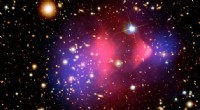
* How it works: This method uses the gravitational lensing effect of stars. When a star passes in front of another star, its gravity bends the light of the more distant star, creating a temporary magnification. If there's a planet orbiting the foreground star, it can cause an additional, short-lived brightening.
* Evidence: Microlensing has helped detect planets in a variety of systems, including those that are too far away or too faint to be detected by other methods.
5. Astrometry
* How it works: This method involves precisely measuring the tiny changes in a star's position in the sky due to the gravitational pull of an orbiting planet.
* Evidence: Astrometry is a challenging method, but it has been used to confirm some exoplanets discovered by other methods.
Summary:
The diverse and successful methods used to detect exoplanets provide compelling evidence that planets are common beyond our solar system. We are constantly refining these techniques and developing new ones, allowing us to discover and learn more about these fascinating worlds.