1. Identify Your Location and Time:
* Location: Your latitude and longitude greatly affect what stars are visible. Use a website like Google Maps to get your coordinates.
* Time: The stars shift position throughout the night, so the exact time is crucial.
2. Choose a Stargazing App:
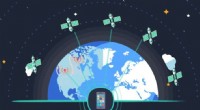
* Star Chart: This app allows you to point your phone at the sky, and it will identify stars, constellations, planets, and other celestial objects.
* SkySafari: This app is more comprehensive and provides a vast amount of astronomical data.
* Stellarium: This app is a powerful planetarium software that can be downloaded to your computer.
3. Use a Star Chart:
* Find Your Constellation: Star charts usually depict constellations. The app will help you find the constellation your chosen star belongs to.
* Locate the Star: The star chart will show the star's position within the constellation.
* Identify the Star: Once you've found your constellation, use the app's tools to pinpoint the exact star.
4. Look for Key Features:
* Brightness: Stars are classified by their apparent magnitude (brightness as seen from Earth). A lower magnitude means a brighter star.
* Color: Stars come in different colors depending on their temperature (red is cooler, blue is hotter).
* Position: Stars don't move much relative to each other, making them easy to locate once you've identified them.
5. Use the Night Sky:
* Orient Yourself: Use the North Star (Polaris) to help you determine north. It's located at the end of the handle of the Little Dipper (Ursa Minor).
* Seek Familiar Constellations: Constellations like Orion, Ursa Major (Big Dipper), and Cassiopeia are easy to find.
* Look for Planets: Planets are brighter and don't twinkle like stars.
Important Tips:
* Find a Dark Location: Light pollution from cities obscures the stars.
* Give Your Eyes Time to Adjust: It takes about 30 minutes for your eyes to fully adapt to the darkness.
* Be Patient: Finding a star can take some time, so don't get discouraged.
* Enjoy the Experience: Stargazing is a wonderful way to connect with the vastness of the universe!
Let me know if you'd like to find a specific star. Just tell me the star's name or the constellation it belongs to, and I'll help you find it in the night sky.