1. Nature:
* Sun: A star, a giant ball of hot, glowing gas that produces its own light and heat through nuclear fusion.
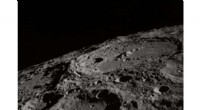
* Moon: A natural satellite, a rocky body that orbits a planet (in this case, Earth) and reflects light from the Sun.
2. Size and Mass:
* Sun: Massive, with a diameter of about 1.39 million kilometers. It's roughly 109 times wider than Earth and 333,000 times heavier.
* Moon: Relatively small, with a diameter of about 3,474 kilometers. It's only about 1/4 the size of Earth and 1/81 of its mass.
3. Composition:
* Sun: Primarily composed of hydrogen (70%) and helium (28%) with trace amounts of other elements.
* Moon: Composed mainly of rock, with a thin, weak atmosphere called an exosphere.
4. Light and Heat:
* Sun: Emits its own light and heat due to nuclear fusion in its core.
* Moon: Doesn't emit its own light, it only reflects sunlight. Its surface temperature varies greatly depending on whether it's facing the sun or not.
5. Atmosphere:
* Sun: Has a very hot and dense atmosphere called the corona.
* Moon: Has a very thin, weak atmosphere called an exosphere.
6. Gravity:
* Sun: Has a very strong gravitational pull, holding the planets in our solar system in orbit.
* Moon: Has a weaker gravitational pull than Earth, which is why we experience tides.
7. Activity:
* Sun: Constantly active with solar flares, sunspots, and coronal mass ejections.
* Moon: Geologically inactive with little to no volcanic activity.
8. Distance from Earth:
* Sun: About 149.6 million kilometers away from Earth.
* Moon: About 384,400 kilometers away from Earth.
In short:
The Sun is a star, a giant ball of burning gas, while the Moon is a natural satellite, a rocky body that reflects light from the Sun. The Sun is much larger, hotter, and more massive than the Moon. It's a source of light and heat, while the Moon reflects sunlight. The Sun has a strong gravitational pull and is constantly active, while the Moon is inactive and has a weak gravitational pull.