1. Cosmic Microwave Background Radiation (CMB):
* Observation: This faint afterglow of the Big Bang is the most direct evidence we have for the universe's early state. Scientists use telescopes like the Planck satellite to map the CMB across the sky.
* Interpretation: By analyzing the tiny temperature variations within the CMB, cosmologists can learn about the universe's age, composition, and how it expanded after the Big Bang.
2. Redshift and Expansion:
* Observation: Distant galaxies are moving away from us, and the farther they are, the faster they seem to be moving. This phenomenon is known as redshift.
* Interpretation: The redshift is interpreted as evidence for the expansion of the universe. This expansion, discovered by Edwin Hubble, supports the Big Bang theory.
3. Abundance of Light Elements:
* Observation: The universe is composed of roughly 75% hydrogen and 25% helium, with trace amounts of heavier elements.
* Interpretation: The abundance of light elements is consistent with predictions made by the Big Bang model for the early universe's conditions.
4. Dark Matter and Dark Energy:
* Observation: Observations of galaxies and galaxy clusters show that there is far more gravity than can be accounted for by the visible matter we see. This "missing" matter is known as dark matter. Additionally, the expansion of the universe is accelerating, implying a mysterious energy source called dark energy.
* Interpretation: Scientists are actively researching the nature of dark matter and dark energy. These components likely played a crucial role in shaping the evolution of the universe.
5. Computer Simulations:
* Methodology: Scientists create computer simulations of the Big Bang and its aftermath. These simulations incorporate our understanding of physics and the observed properties of the universe.
* Interpretation: By comparing the results of these simulations with observations, scientists can test the validity of their theories and learn more about how the universe evolved.
6. Particle Accelerators:
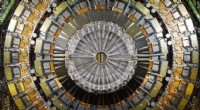
* Methodology: Experiments at facilities like the Large Hadron Collider (LHC) recreate conditions similar to those that existed in the early universe.
* Interpretation: Studying the behavior of particles at these extreme energies provides insights into the fundamental forces and particles that existed in the very early universe.
7. Gravitational Waves:
* Observation: In 2015, scientists detected gravitational waves for the first time, ripples in spacetime caused by violent cosmic events like black hole collisions.
* Interpretation: Gravitational waves offer a new way to study the universe and provide information about extreme events that may have occurred in the early universe.
Limitations and Future Directions:
While these methods provide strong evidence for the Big Bang theory, they also have limitations. For instance, we can't directly observe the universe's very first moments, and the nature of dark matter and dark energy remains a mystery. Future research will likely involve improving our understanding of these components and exploring new theoretical frameworks.
The study of the universe's origin is a continuous process of observation, interpretation, and theoretical development. Scientists are constantly pushing the boundaries of our knowledge and understanding of the universe, drawing upon both clever experimental techniques and the power of theoretical physics.