* The constellation's angular size: Orion covers a large area of the sky, approximately 643 square degrees. That's about 1.5% of the entire celestial sphere.
* The sizes of its individual stars: The stars within Orion vary greatly in size. For example:
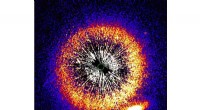
* Betelgeuse (the red supergiant) is about 1,000 times larger than our Sun, with a radius of about 800 million kilometers.
* Rigel (the blue supergiant) is about 70 times larger than our Sun.
* The Orion Nebula's size: The Orion Nebula, a prominent feature within the constellation, is about 24 light-years across.
So, depending on what aspect of Orion you're interested in, its "size" can vary significantly.