* Our location matters: The brightness of the supernova would depend on your exact location on Earth. Someone closer to the equator would see it brighter than someone further north or south.
* The supernova is unpredictable: We don't know exactly how bright the supernova will be at its peak. Estimates range from -10 to -17 magnitude.
However, we can provide some comparisons:
* Sirius is currently the brightest star in our sky at -1.46 magnitude.
* Estimates for Betelgeuse's supernova range from -10 to -17 magnitude.
This means:
* At the low end of the estimate (-10 magnitude), the supernova would be about 8.5 magnitudes brighter than Sirius, which is roughly 10,000 times brighter.
* At the high end (-17 magnitude), the supernova would be about 15.5 magnitudes brighter than Sirius, which is roughly 10 million times brighter.
In perspective:
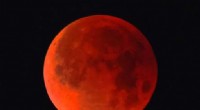
* The Betelgeuse supernova could be as bright as the full moon or even brighter. It would be visible in broad daylight and cast shadows at night.
* It could remain visible for months, even years, after the initial explosion.
Important note:
* These are just estimations. The actual brightness of the supernova could be different.
* We don't know when the supernova will happen, but it could be any day now or thousands of years from now.
It's safe to say that the Betelgeuse supernova would be an absolutely spectacular event, even if it doesn't reach the brightest estimates.