* Formation Models: The most accepted theory for planet formation is the core accretion model. This model states that planets start as small, rocky cores that gradually attract gas and dust from the protoplanetary disk. Gas giants are thought to form when these cores reach a critical mass, allowing them to gravitationally capture huge amounts of hydrogen and helium.
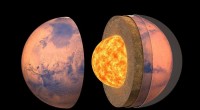
* Internal Structure Models: Based on gravitational measurements and observations of magnetic fields, scientists have developed models of gas giant interiors. These models suggest the presence of a dense, solid core, although its composition and size remain uncertain.
* Jupiter's Magnetic Field: Jupiter's incredibly strong magnetic field is likely generated by a dynamo process within a solid, metallic core. This provides further evidence for the existence of solid cores in gas giants.
However, some key things to consider:
* No Direct Observation: We haven't actually drilled into the cores of gas giants, so these are just educated guesses based on indirect evidence.
* Core Composition: The exact composition of the core is unknown. It's likely a mix of heavier elements like iron, nickel, and silicate minerals, but it could also contain exotic materials under immense pressure and heat.
* Size and Density: The size and density of the core are also debated. Some models suggest relatively small, dense cores, while others propose larger, less dense cores.
In conclusion, while the existence of solid cores in gas giant planets is widely accepted, the details of their composition, size, and structure remain a subject of ongoing scientific investigation.