* Mass: This is the most fundamental property that can be determined from binary star observations. By observing the orbital period and the separation of the stars, we can use Kepler's laws of planetary motion to calculate the total mass of the system. If we can also determine the individual velocities of the stars, we can further break down the total mass into the individual masses of each star.
* Orbital parameters: Besides the orbital period, we can also determine the eccentricity of the orbit (how elliptical it is), the inclination of the orbit (the angle from our line of sight), and the semi-major axis (the average distance between the stars).
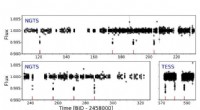
* Stellar radii: By observing eclipses of one star by the other, we can determine the relative sizes of the stars.
* Stellar luminosities: The total light output of the system can be measured, and by analyzing the contributions of each star, we can determine their individual luminosities.
* Stellar temperatures: Spectral analysis of the stars can reveal their surface temperatures.
* Stellar compositions: By analyzing the spectral lines of the stars, we can determine the relative abundance of different elements in their atmospheres.
* Stellar evolution: By observing how the binary system evolves over time, we can gain insights into the life cycles of stars.
In short, binary stars provide a rich laboratory for studying the properties and evolution of stars. By carefully observing their orbital motions and other characteristics, we can learn a great deal about these fascinating celestial objects.