Gravitational Pull:
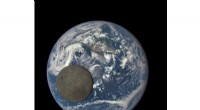
* Moon's Gravity: The Moon exerts a gravitational pull on Earth's oceans, pulling water towards it. This force is strongest on the side of Earth facing the Moon, creating a bulge of water known as a high tide.
* Centrifugal Force: Earth's rotation also creates a bulge of water on the opposite side of the planet due to centrifugal force. This also results in a high tide.
Tides:
* High Tides: The bulges of water caused by the Moon's gravity and Earth's rotation result in high tides.
* Low Tides: The areas between these bulges experience low tides.
* Tidal Cycle: The combination of the Moon's orbit around Earth and Earth's rotation leads to a cyclical pattern of high and low tides, roughly every six hours.
Other Factors:
* Sun's Influence: The Sun also has a gravitational pull on Earth's oceans, but it's weaker than the Moon's. When the Sun and Moon align (new and full moons), their gravitational forces combine, creating especially high tides called spring tides.
* Earth's Shape: Earth's shape (an oblate spheroid) also influences the tides, with different parts of the planet experiencing varying tidal ranges.
* Geography: Local geography, such as the shape of coastlines and ocean basins, can further modify tidal patterns.
Impact:
* Coastal Environments: Tides play a vital role in shaping coastal environments, influencing erosion, deposition, and the distribution of marine life.
* Marine Life: Many marine organisms have adapted to live with the tides, using them for feeding, reproduction, and migration.
* Human Activities: Tides are important for navigation, fishing, and various coastal industries.
In Conclusion:
The Moon's gravitational pull is the primary driver of the tides. This relationship has profound implications for Earth's oceans, coastlines, and marine life, making it a crucial aspect of our planet's dynamic systems.