Here's a breakdown of the cycle's key features:
1. Solar Minimum:
* Fewest sunspots: The Sun's activity is at its lowest point.
* Weak magnetic field: The Sun's magnetic field is relatively weak and tangled.
* Quiet Sun: Solar flares and coronal mass ejections are infrequent and less intense.
2. Solar Maximum:
* Most sunspots: The Sun's activity reaches its peak.
* Strong magnetic field: The Sun's magnetic field is at its strongest, and the magnetic field lines are twisted and tangled.
* Active Sun: Solar flares and coronal mass ejections are frequent and intense.
3. The Cycle:
* The cycle starts from solar minimum, where the magnetic field lines are relatively calm.
* As the cycle progresses, the magnetic field lines become increasingly tangled and twisted, leading to the emergence of sunspots.
* The number of sunspots gradually increases, reaching a peak during solar maximum.
* After solar maximum, the magnetic field lines start to untangle, and the number of sunspots decreases.
* The cycle ends with another solar minimum, completing the 11-year cycle.
Factors influencing the cycle:
* Internal dynamo: The Sun's internal dynamo, driven by the movement of plasma within its core, generates the magnetic field.
* Differential rotation: The Sun's equator rotates faster than its poles, which contributes to the tangling of magnetic field lines.
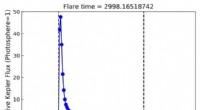
* Solar flares and coronal mass ejections: These events, triggered by the Sun's magnetic activity, release energy and particles into space, influencing the Earth's atmosphere and technology.
Impact on Earth:
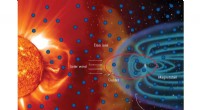
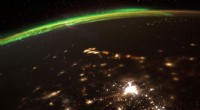
* Space weather: The Sun's activity affects the Earth's magnetosphere, potentially disrupting satellite communications, power grids, and navigation systems.
* Climate: While the Sun's cycle has a small influence on Earth's climate, it's not the primary driver of long-term climate change.
The sunspot cycle is a fascinating and complex phenomenon that helps us understand the Sun's behavior and its impact on Earth. By studying it, we can better predict and mitigate space weather events.