1. Hydrogen Fusion:
* Stars like our Sun primarily generate energy through nuclear fusion, where hydrogen atoms combine to form helium. This process releases immense energy, creating outward pressure that balances the inward pull of gravity.
* This balance maintains the star's size and stability.
2. Hydrogen Depletion:
* Eventually, the hydrogen fuel in the star's core is depleted. The fusion process slows down, decreasing the outward pressure.
* Gravity then dominates, causing the core to contract and heat up.
3. Shell Burning:
* The core's heating triggers hydrogen fusion in a shell surrounding the core. This shell burning is more intense than core burning and produces more energy.
* This extra energy pushes the outer layers of the star outward, causing it to expand significantly.
4. Cooling and Reddening:
* As the star expands, its surface cools down. The cooler surface emits less blue light and more red light, giving the star its characteristic reddish hue.
5. The Giant Phase:
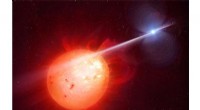
* This expansion and cooling marks the star's entry into the red giant phase. The star can become hundreds of times larger than its original size.
In summary, the expansion of a red giant is driven by the interplay of gravity, nuclear fusion, and the depletion of hydrogen fuel in its core. This process ultimately leads to the star's evolution towards its final stages, which may include becoming a white dwarf, a neutron star, or a supernova.