* Massive Star: We're talking about stars significantly larger than our Sun, with masses at least 8 times greater. These stars burn through their fuel quickly and violently.
* Collapse: When a massive star runs out of fuel, its core can no longer support itself against gravity. The core collapses inward with incredible force.
* Neutron Star Formation: The immense pressure from the collapse crushes the protons and electrons in the core together, forming neutrons. The core becomes incredibly dense, packing the mass of a star into a sphere only a few miles across.
* Small Volume: This density is unimaginable - a teaspoon of neutron star material would weigh billions of tons on Earth!
* Gravity: The remaining material of the star is ejected in a massive supernova explosion, leaving behind the incredibly dense neutron star. This object has incredibly strong gravity, making it one of the most extreme objects in the universe.
Key Characteristics of a Neutron Star:
* Extremely dense: The densest object known besides black holes.
* Small size: Only about 12-20 miles in diameter.
* Rapid rotation: Many neutron stars rotate incredibly quickly, sometimes hundreds of times per second.
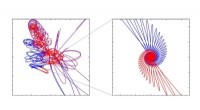
* Strong magnetic field: Neutron stars have the strongest magnetic fields known in the universe.
* Pulsars: Some neutron stars emit beams of radiation that are visible as pulses from Earth.
Let me know if you'd like to learn more about neutron stars or any other astronomical object!