Similarities:
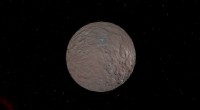
* Spherical Shape: Both planets and moons are typically spherical due to their own gravity pulling them into a round shape.
* Orbits a Star: Planets orbit a star, and moons orbit a planet. The moon orbits Earth, which in turn orbits the sun.
* Composition: Both planets and moons can be made up of rock, ice, or gas, depending on their formation and distance from the star.
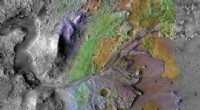
* Surface Features: Planets and moons can have craters, mountains, valleys, and other surface features created by various geological processes.
* Gravity: Both planets and moons have their own gravity, although weaker than that of stars.
Differences:
* Size: Planets are significantly larger than moons. Even the largest moon in our solar system, Ganymede, is smaller than the planet Mercury.
* Self-luminosity: Planets do not produce their own light; they reflect light from their star. Moons also reflect light, but they are not self-luminous.
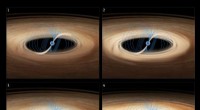
* Formation: Planets are formed from the accretion of dust and gas in a protoplanetary disk, while moons can form from the same disk or from material ejected from a planet.
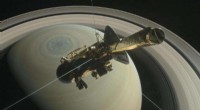
* Atmosphere: Planets can have atmospheres, while most moons do not. Exceptions include Titan (Saturn's moon) and Triton (Neptune's moon).
* Internal Structure: The internal structure of planets can be more complex than that of moons, with layers like a core, mantle, and crust.
Therefore, while the moon shares some characteristics with planets, it is fundamentally a satellite, meaning it orbits a planet. It is not a planet in its own right.