What it is:
* A telescope: It's essentially a giant, super-powerful telescope that gathers light from distant objects in space.
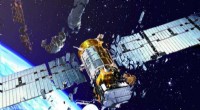
* In space: Unlike telescopes on Earth, Hubble orbits above the atmosphere, meaning its view isn't distorted by air currents or light pollution.
* Reflecting telescope: It uses mirrors to focus light, similar to many telescopes you might use on Earth.
What it does:
* Observes distant objects: It can see incredibly far into space, allowing us to study galaxies, stars, planets, nebulae, and other celestial objects.
* Captures stunning images: Hubble's images are incredibly detailed and beautiful, offering a glimpse into the vastness and wonder of the universe.
* Provides scientific data: Hubble's observations help scientists learn about the age, size, and composition of the universe, the formation of stars and planets, and the evolution of galaxies.
Key Features:
* Large primary mirror: Its 2.4-meter (7.9-foot) primary mirror collects a lot of light, allowing it to see very faint objects.
* Multiple instruments: Hubble carries different cameras and spectrometers to observe in various wavelengths of light (visible, ultraviolet, infrared).
* Regular maintenance: Astronauts have visited Hubble several times to repair and upgrade it, keeping it operational for decades.
Impact:
* Scientific breakthroughs: Hubble has made countless groundbreaking discoveries about the universe, including the age of the universe, the existence of dark energy, and the presence of supermassive black holes at the centers of galaxies.
* Public inspiration: Its breathtaking images have captured the imagination of people around the world, fostering an appreciation for astronomy and science.
The Future:
Hubble is still operational, but it's getting older and eventually will be retired. The James Webb Space Telescope, launched in 2021, is Hubble's successor and is expected to provide even more powerful observations of the universe.