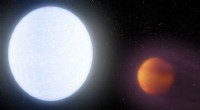
1. Temperature: This is primarily determined by the star's color. Hotter stars emit more blue light, while cooler stars emit more red light.
2. Luminosity (or Absolute Magnitude): This refers to the total amount of light a star emits. It's often represented on a scale called absolute magnitude, where smaller numbers indicate brighter stars.
3. Spectral Class: This is determined by analyzing the star's light spectrum. Different elements in the star's atmosphere absorb specific wavelengths, creating unique patterns in the spectrum. The main spectral classes are:
* O: Blue, hottest
* B: Blue-white
* A: White
* F: Yellow-white
* G: Yellow (our Sun is a G-type star)
* K: Orange
* M: Red, coolest
4. Size (or Radius): This refers to the physical size of a star. Some stars are giants, while others are dwarfs.
5. Mass: This is the amount of matter a star contains. Mass is the primary factor determining a star's lifespan and evolution.
6. Composition: While the majority of stars are mostly hydrogen and helium, minor differences in their composition can affect their characteristics.
7. Age: Stars are born, evolve, and eventually die. Their age influences their properties, including luminosity and size.
These characteristics are used to create the Hertzsprung-Russell diagram (H-R diagram), a fundamental tool in stellar astronomy that plots stars based on their temperature and luminosity.