The Basic Idea:
* Escape Velocity: Earth has gravity, which pulls everything towards it. To escape this pull and enter space, a spaceship needs to reach a certain speed called escape velocity. This is about 11.2 kilometers per second (7 miles per second).
* Thrust and Fuel: Powerful engines provide the thrust (force) needed to accelerate the spaceship to escape velocity. These engines burn fuel, converting its chemical energy into kinetic energy (the energy of motion).
* Vertical Ascent: The spaceship typically launches vertically to minimize air resistance and maximize efficiency.
The Stages:
1. Launch:
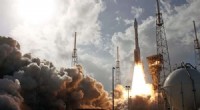
* The engines ignite, generating enormous thrust that lifts the spaceship off the launchpad.
* As the spaceship ascends, it encounters increasing air resistance.
* The engines continue to fire, overcoming air resistance and gravity.
2. Staging:
* To save fuel and reduce weight, many rockets use multiple stages.
* Each stage is a separate section of the rocket with its own engines and fuel.
* When a stage's fuel is exhausted, it detaches and falls back to Earth, allowing the next stage to ignite.
3. Reaching Orbit:
* Once the spaceship reaches a sufficient altitude, it begins to fly horizontally.
* It uses its engines to adjust its speed and trajectory to achieve a stable orbit around Earth.
4. Leaving Earth:
* To leave Earth's orbit and travel to other planets, the spaceship needs to further increase its speed.
* It uses powerful engines for a "burn" that accelerates it to the required speed.
Types of Engines:
* Chemical Rockets: These are the most common type, using the combustion of fuel and oxidizer to produce hot gas that is expelled from the rocket nozzle.
* Electric Propulsion: These engines use electricity to accelerate ions or charged particles, providing a gentler but longer-lasting thrust.
* Nuclear Thermal Rockets: These use nuclear fission to heat up a propellant, creating a powerful thrust.
Key Factors:
* Weight: The lighter the spacecraft, the less fuel is needed to launch it.
* Aerodynamics: The shape of the spaceship affects its air resistance and how efficiently it can climb.
* Fuel Efficiency: The type of engines and the fuel used determine the rocket's efficiency.
* Trajectory: The launch path, including the angle and direction, is carefully calculated to minimize fuel consumption and maximize efficiency.
It's important to note that getting to space is a complex and delicate process that requires precise calculations, careful planning, and years of research and development.