1. Observing Waves:
* Sun: Helioseismology studies sound waves (pressure waves) that travel through the Sun's interior. By analyzing the patterns of these waves on the solar surface, we can deduce information about the Sun's internal structure, temperature, and composition.
* Earth: Seismic waves generated by earthquakes travel through the Earth's interior. These waves are analyzed to create detailed images of the Earth's layers (crust, mantle, core), their properties, and their composition.
2. Studying Radiation:
* Sun: We study the electromagnetic radiation (light, X-rays, radio waves) emitted by the Sun to understand the processes happening in its core and atmosphere. This includes studying the spectral lines emitted by various elements to determine their abundance and temperature.
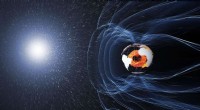
* Earth: Geothermal energy released from the Earth's interior provides information about the heat flow and radioactive processes within. Additionally, the magnetic field generated by the Earth's core is another form of radiation that we can analyze to understand its structure and dynamics.
3. Modeling and Simulation:
* Sun and Earth: Both involve the use of complex computer models to simulate their internal dynamics. These models incorporate physical laws and equations to predict the behavior of the Sun and Earth based on observations and data.
4. Limitations:
* Sun and Earth: Both approaches have limitations. We cannot directly access the interiors of either body, so inferences about their structures rely on indirect observations and theoretical models.
Further Similarities:
* Gravity: Both the Sun and Earth are governed by gravity, which plays a significant role in shaping their internal structure.
* Convection: Both Sun and Earth experience convection, where heat is transferred by the movement of fluids (plasma in the Sun, molten rock in the Earth).
Differences:
* Scale: The Sun is vastly larger than the Earth, which presents different challenges in observation and data analysis.
* Temperature and Pressure: The Sun's interior experiences extreme temperatures and pressures, making it impossible to replicate those conditions in laboratory experiments.
* Composition: The Sun is primarily composed of hydrogen and helium, while Earth has a more complex composition with a solid, rocky surface.
In conclusion, although we use different tools and approaches to study the Sun and Earth, there are interesting parallels in the way we probe their internal structures. Both rely heavily on observations, modeling, and analyzing waves and radiation to understand their complex internal processes.