1. No Atmosphere: Both Mercury and the Moon lack a substantial atmosphere. This is due to their low gravity, which is insufficient to hold onto gas molecules. This results in extreme temperature fluctuations between day and night, as there's no atmosphere to regulate the heat.
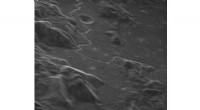
2. Cratered Surfaces: Both bodies have heavily cratered surfaces, a result of being bombarded by asteroids and meteoroids throughout their history. The absence of atmospheric protection and tectonic activity leaves these impacts visible.
3. Weak Magnetic Fields: Both have very weak magnetic fields compared to Earth. This is partly due to their small size and slow rotation, which limits the generation of internal magnetic fields.
4. No Active Volcanism: While both bodies show evidence of past volcanic activity, they are currently geologically inactive.
5. Tidal Locking: The Moon is tidally locked to Earth, always showing us the same face. Mercury, although not tidally locked to the Sun, exhibits a 3:2 spin-orbit resonance. This means it rotates three times for every two orbits around the Sun.
6. Lack of Water (on the Surface): Both Mercury and the Moon are very dry. While there might be some traces of ice in permanently shadowed craters, there are no bodies of liquid water on their surfaces.
7. Significant Temperature Fluctuations: Due to their lack of atmosphere, both experience extreme temperature swings. On the Moon, day temperatures can reach 127°C (261°F), while nighttime temperatures plummet to -173°C (-279°F). Mercury exhibits similar, but even more extreme, temperature fluctuations.
8. Rocky Composition: Both bodies are primarily composed of rock, although Mercury has a higher density due to a larger iron core.
It's important to remember that these are just some of the similarities. While Mercury and the Moon share these characteristics, they are very different in size, composition, and history.