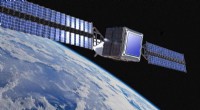
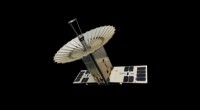
* Sunlight reflection: Satellites are often made of reflective materials, like aluminum. When sunlight hits these surfaces, it reflects back towards Earth, making the satellites visible. This is similar to how we see the moon, which reflects sunlight.
* Atmospheric scattering: Even if a satellite isn't directly reflecting sunlight, it can still be seen due to atmospheric scattering. Sunlight interacts with the molecules in the atmosphere, causing some of it to scatter in different directions. This scattered light can illuminate the satellite, making it appear faint against the darker background of space.
* Earth's shadow: As a satellite orbits Earth, it passes through the Earth's shadow. This causes a noticeable dimming effect, and then brightening again as the satellite emerges from the shadow. This pattern can be used to track the satellite's orbit.
* Satellite's own light: Some satellites, like the International Space Station, have their own sources of light, such as lamps or solar panels. This light can make them even more visible.
However, not all satellites are visible:
* Orbit: The altitude and inclination of the satellite's orbit play a significant role in its visibility. Satellites in low Earth orbit (LEO) are more easily visible than those in higher orbits.
* Size and shape: The size and shape of the satellite also affect its visibility. Smaller satellites are harder to see than larger ones.
* Weather conditions: Cloudy skies can obscure satellites, making them difficult to spot.
To see a satellite:
* Use a satellite tracking app: Many apps can tell you when and where to look for specific satellites.
* Find a dark location: Away from city lights, the night sky will be darker, making satellites easier to see.
* Be patient: Satellites can be faint and move quickly, so it may take some time to spot them.
In summary, we see satellites orbiting because they reflect sunlight, are illuminated by atmospheric scattering, and some have their own light sources. However, visibility depends on factors like orbit, size, and weather conditions.