1. Gravity's Pull: Stars are massive balls of gas, primarily hydrogen and helium. Their immense gravity pulls these gases inward, creating intense pressure and heat in the star's core.
2. Atomic Mash-Up: The extreme pressure and heat in the core cause hydrogen atoms to collide with tremendous force. This force overcomes the natural repulsion between their positively charged nuclei.
3. Fusion Occurs: When hydrogen nuclei collide, they fuse together to form helium nuclei. This fusion process releases a tremendous amount of energy in the form of light and heat.
4. Energy Released: The energy released during fusion is what makes stars shine. It's a continuous process that powers the star for billions of years.
Think of it like this: Imagine you're squeezing a balloon. The more you squeeze, the hotter and brighter it gets. The same principle applies to stars. Gravity squeezes the core, causing fusion and releasing light and heat.
Here's a key point: The light emitted by a star isn't just from the fusion process itself. It's also due to the energy being transferred through the star's layers and radiated out into space.
In summary, stars generate light through nuclear fusion, a process where hydrogen atoms fuse to form helium, releasing immense energy in the form of light and heat.
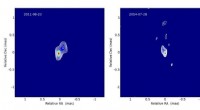




![Collimated Bipolar Jet Discovered Around Red Square Nebula s B[e]-type Star](https://www.scienceaq.com/article/uploadfiles/202110/2021102423305770_S.jpg)