The Big Bang:
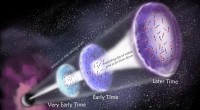
* The very first elements formed in the universe were hydrogen and helium during the Big Bang. These are the lightest elements, and they still make up the vast majority of the universe's matter.
* The Big Bang wasn't hot enough to create elements heavier than helium.
Stellar Nucleosynthesis:
* Stars, including our Sun, are like giant nuclear furnaces. They create heavier elements from lighter ones through a process called nuclear fusion.
* Hydrogen fusion: This is the main process happening in our Sun's core. It fuses hydrogen atoms into helium, releasing vast amounts of energy.
* Further fusion: As stars age and their cores get hotter, they can fuse heavier elements, like carbon, oxygen, and nitrogen.
* Supernovae: The most massive stars eventually explode as supernovae. These cataclysmic events create extremely high temperatures and pressures that fuse even heavier elements like gold, platinum, and uranium.
So, while the Sun is not the source of all elements, it's a major contributor, playing a crucial role in the formation of many elements essential to life (like carbon, oxygen, and nitrogen).
Other sources of elements:
* Cosmic Rays: High-energy particles from space can interact with existing elements, creating even heavier elements through spallation.
* Neutron Stars: Some elements, like some isotopes of platinum and gold, are thought to be created in the intense gravity of neutron stars.
To summarize, the origins of elements are a fascinating story of cosmic events, from the Big Bang to the fiery deaths of stars, with the Sun playing a critical role in this ongoing process.