1. Formation Challenges:
* Standard Formation Models: The prevailing theory for gas giant formation is core accretion. This model suggests that a solid core forms first, then accretes gas from the surrounding disk. However, the process is thought to be very slow, making it difficult to explain how a massive gas giant could form so close to its star.
* Orbital Migration: Some theories suggest that hot Jupiters formed further out and migrated inwards, possibly due to gravitational interactions with other planets or the disk. However, the mechanisms for this migration are complex and not fully understood.
2. Unexpected Properties:
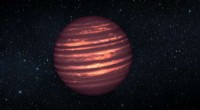
* Close Proximity: The close orbits of hot Jupiters are incredibly tight, with orbital periods as short as a few days. This proximity exposes them to intense radiation from their host star, which they would have to withstand without being completely vaporized.
* High Temperatures: The intense radiation from their stars heats these planets to extreme temperatures, reaching thousands of degrees Celsius. This is significantly hotter than expected based on their distance from the star.
* Tidally Locked: Hot Jupiters are tidally locked to their stars, meaning one side always faces the star and the other always faces away. This leads to extreme temperature differences between the two sides, which poses a challenge for understanding their atmospheric dynamics and evolution.
3. Prevalence and Diversity:
* Frequent Occurrence: Hot Jupiters are surprisingly common, with an estimated 1% of Sun-like stars hosting one. This prevalence suggests that their formation might not be as rare or difficult as initially thought.
* Diversity: Hot Jupiters come in various sizes, masses, and orbital characteristics, making them a diverse and complex group. This diversity further complicates our understanding of their formation and evolution.
The existence of hot Jupiters challenges our current understanding of planet formation and evolution. Researchers are actively exploring various theories and models to explain these intriguing objects, and ongoing observations and simulations are providing new insights into their properties and origins.