Here's a breakdown of what it *actually* means and the issues surrounding the concept:
1. What it REALLY is:
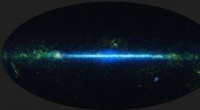
* The Sun's position relative to the Milky Way: From Earth, the Milky Way appears as a band of stars across the sky. Our Sun, along with the entire solar system, orbits the galactic center. This orbit means the Sun's position relative to the Milky Way changes over time.
* Specific alignments: Every 26,000 years, our Sun aligns with the galactic center. This alignment is not a single, instantaneous event but a gradual process.
2. What it ISN'T:
* A magical event: The alignment doesn't cause any unusual cosmic events, like sudden changes in gravity or energy bursts. It's simply a change in the Sun's position relative to the Milky Way.
* A predictive tool: The alignment doesn't have any mystical or predictive power. It's not connected to any specific historical events or future occurrences.
3. Misconceptions and the "Galactic Alignment" Myth:
* Ancient civilizations: Some believe that ancient cultures had advanced knowledge of the galactic alignment and used it for rituals or prophecies. However, there is no scientific evidence to support these claims.
* 2012 doomsday predictions: Some theories claimed that the 2012 alignment would mark the end of the world, but this was clearly debunked.
In conclusion:
The galactic alignment is a real astronomical phenomenon but it's not a magical or mystical event. It's important to separate scientific facts from sensationalized interpretations.