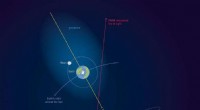
1. Energy Efficiency: Launching directly towards the moon would require an enormous amount of fuel. It's much more efficient to use a curved trajectory, called a Hohmann Transfer Orbit. This orbit utilizes the Earth's gravity to "slingshot" the spacecraft towards the moon, using less fuel and making the journey more practical.
2. Earth's Rotation: Launching eastward, taking advantage of Earth's rotation, provides a "free" boost of velocity, saving more fuel. Imagine throwing a ball forward while standing on a moving train - the ball gets an extra push from the train's momentum.
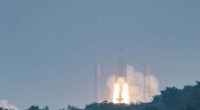
3. Avoiding Atmospheric Drag: Launching straight up would mean the spacecraft has to fight against Earth's atmosphere for a longer period. A curved trajectory allows the spacecraft to quickly escape the thickest part of the atmosphere, minimizing drag and fuel expenditure.
4. Reaching the Moon's Orbit: A direct trajectory wouldn't necessarily land the spacecraft on the moon. To enter lunar orbit, the spacecraft needs to slow down significantly, which requires additional fuel. A Hohmann Transfer Orbit allows for the spacecraft to naturally slow down as it approaches the moon, making it easier to enter lunar orbit.
In summary: While launching straight up to the moon might seem intuitive, it's not the most efficient way to reach our celestial neighbor. Using a curved trajectory, taking advantage of Earth's rotation and gravity, makes the journey more fuel-efficient and practical. This approach was crucial during the space race when minimizing fuel usage was critical for mission success.