1. The Nebula: A Cosmic Cradle
* Giant Molecular Clouds: Star formation begins within vast, cold, and dense clouds of gas and dust called giant molecular clouds. These clouds are primarily composed of hydrogen and helium, with traces of heavier elements.
* Gravity Takes Hold: Within these clouds, gravity acts as the driving force. Tiny fluctuations in density create regions where gravity is slightly stronger. These areas begin to pull in surrounding material.
2. Collapse and Heating
* Core Formation: As more material is pulled in, the core of the collapsing region becomes denser and hotter. The collapse accelerates, releasing gravitational energy that further heats the core.
* Protostar Formation: At some point, the core becomes hot enough to glow – a protostar is born. This is not yet a true star; it is still accreting material from the surrounding cloud.
3. Accretion and Jet Formation
* Disk Formation: The material falling onto the protostar forms a rotating disk around it. This disk feeds the protostar, providing it with more material.
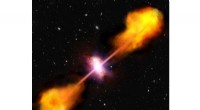
* Jets: Some of the infalling gas is ejected from the poles of the protostar in powerful jets of material, creating visible "outflows" in the surrounding nebula.
4. Nuclear Fusion Ignition
* Critical Temperature: As the protostar continues to accrete mass, its core gets progressively hotter and denser. Eventually, the core reaches a critical temperature of around 10 million Kelvin.
* Fusion Begins: At this temperature, nuclear fusion ignites. Hydrogen atoms fuse to form helium, releasing immense amounts of energy. This energy creates outward pressure that counteracts gravity.
5. Main Sequence Star
* Hydrostatic Equilibrium: The star now enters a stable state of hydrostatic equilibrium, where the inward force of gravity is balanced by the outward pressure from nuclear fusion. This is the stage where stars spend most of their lives, like our Sun.
6. Stellar Evolution:
* Beyond Main Sequence: After millions or billions of years, stars evolve depending on their mass. They can become giants, supergiants, or even supernovae.
* New Elements: Nuclear fusion within stars creates heavier elements, enriching the universe with the building blocks of planets and life.
In Summary:
Star formation in a nebula is a complex process driven by gravity. It begins with the collapse of a dense cloud of gas and dust, leading to the formation of a protostar. As the protostar accretes material, its core heats up until nuclear fusion ignites, transforming it into a true star. This process is essential for creating the stars that populate the universe and shape its evolution.