1. Direct Compositional Analysis:
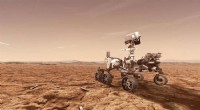
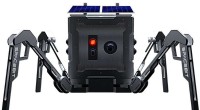
* Surface Samples: Probes like the Mars rovers can directly analyze the composition of planetary surfaces, including minerals, rocks, and even organic molecules. Telescopes can only analyze light reflected from these surfaces, which provides limited information about their composition.
* Atmospheric Composition: Probes can directly measure the composition of a planet's atmosphere, including the abundance of different gases, isotopes, and even trace elements. Telescopes can only infer atmospheric composition based on the spectral analysis of light passing through it.
2. Detailed Surface Morphology:
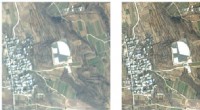
* High-Resolution Images: Probes can provide incredibly detailed images of planetary surfaces, revealing features like mountains, craters, and even small rocks. Telescopes, due to the limitations of distance and atmospheric distortion, can only provide relatively low-resolution images.
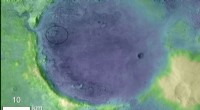
* Surface Topography: Probes can map the topography of a planet, including the elevation and shape of its landforms, using radar or laser altimetry. Telescopes can only infer topography based on indirect methods like shadow analysis.
3. Dynamic Processes:
* Weather and Climate: Probes can directly measure the temperature, pressure, and wind patterns of a planet's atmosphere, providing insights into its weather and climate. Telescopes can only observe general patterns and changes in atmospheric conditions.
* Magnetic Fields: Probes can measure the strength and direction of a planet's magnetic field, providing information about its internal structure and dynamics. Telescopes can only detect the presence of a magnetic field by observing its interaction with solar wind.
* Volcanic Activity: Probes can detect active volcanoes and monitor their eruptions, providing insights into the internal heat and geological activity of a planet. Telescopes can only detect the presence of volcanic features and may observe signs of recent activity.
4. In-situ Measurements:
* Gravity: Probes can measure the gravitational field of a planet with high precision, providing information about its mass distribution and internal structure. Telescopes can only infer the gravitational field based on the motion of satellites or other celestial objects.
* Seismic Activity: Probes like the InSight lander on Mars can detect and analyze seismic waves, providing insights into the planet's internal structure and geological activity. Telescopes can only observe the effects of seismic activity on the surface, such as fault lines or landslides.
5. Exploration of Unreachable Places:
* Underground Structures: Probes can use radar or other techniques to explore the subsurface of a planet, revealing hidden structures like canyons, caves, or water bodies. Telescopes cannot penetrate the surface of a planet.
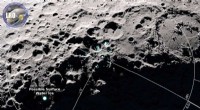
* Polar Regions and Other Difficult Areas: Probes can land or orbit planets at high latitudes or other difficult-to-reach regions, providing information that telescopes cannot access.
In summary, space probes provide a direct and detailed look at planets that is simply not possible from Earth-based telescopes. They are essential for understanding the composition, structure, dynamics, and history of our solar system's planets.