Here's a breakdown:
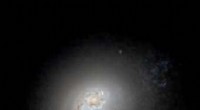
1. The Large Magellanic Cloud (LMC):
* Size: It's the largest of the two, spanning about 14,000 light-years across.
* Distance: About 163,000 light-years from Earth.
* Features:
* Contains a variety of celestial objects, including star clusters, nebulae, and supernova remnants.
* Home to the Tarantula Nebula, the most active star-forming region in the Local Group (the group of galaxies containing the Milky Way).
* Visibility: Visible to the naked eye in the Southern Hemisphere.
2. The Small Magellanic Cloud (SMC):
* Size: About 7,000 light-years across.
* Distance: About 200,000 light-years from Earth.
* Features:
* Contains many young stars and star clusters.
* Visibility: Visible to the naked eye in the Southern Hemisphere.
Importance:
* Study of Galaxy Evolution: The Magellanic Clouds provide a valuable opportunity to study the processes of star formation, galaxy evolution, and interaction between galaxies.
* Understanding the Milky Way: Their gravitational interaction with the Milky Way is believed to have a significant influence on the Milky Way's structure and evolution.
* Home to Exotic Objects: The Magellanic Clouds host a variety of fascinating astronomical objects, including the supernova remnant 1987A, which provided valuable insights into supernova explosions.
Fun Fact: The Magellanic Clouds are not actually clouds in the traditional sense. They are dwarf galaxies, composed of billions of stars, gas, and dust.