1. Stellar Motion:
* Proper Motion: Stars are constantly moving, albeit very slowly. Over millions of years, their positions relative to each other will change. This will cause the shapes of familiar constellations to morph and even break apart.
* Galactic Rotation: The Milky Way galaxy is rotating, carrying the Sun and its surrounding stars with it. This will shift our perspective on distant stars, further altering the appearance of constellations.
2. New Stars & Supernovae:
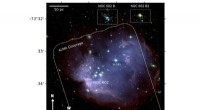
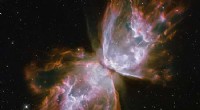
* Stellar Evolution: Stars are born, age, and die. In 250 million years, new stars will form in some parts of the sky, while others will become supernovae, dramatically altering the appearance of the night sky.
3. Precession:
* Earth's Wobble: Earth's axis wobbles like a spinning top, a phenomenon called precession. This wobble takes about 26,000 years to complete a cycle. Over 250 million years, this wobble will have dramatically shifted our view of the celestial poles, significantly impacting the constellations.
4. Continental Drift:
* Changing Perspective: Continents drift across the Earth's surface. Over 250 million years, the continents will have shifted positions, changing our vantage point from Earth, further impacting the appearance of constellations.
What we might see:
* Familiar constellations will be unrecognizable. The Big Dipper might look like a squiggly line, and Orion might be scattered across the sky.
* New constellations will emerge. New star clusters and supernova remnants could form new, dramatic patterns.
* The celestial poles will be in entirely different locations. The North Star (Polaris) might be gone, replaced by a completely different star.
It's impossible to predict the exact details, but we can be certain that the night sky will be vastly different. Future generations will enjoy a completely new set of star patterns, adding to the wonder and mystery of the cosmos.