1. Observation:
* Telescopes: Powerful telescopes track asteroids, observing their position and movement in the sky.
* Radar: Radar signals bounced off asteroids provide highly accurate measurements of their distance, size, and shape.
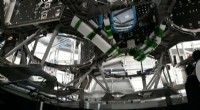
* Spacecraft: Missions like NASA's OSIRIS-REx spacecraft provide close-up images and data about asteroid surfaces and compositions.
2. Mathematical Modeling:
* Orbital Mechanics: Astronomers use laws of gravity and celestial mechanics to calculate an asteroid's orbit, predicting its future position and trajectory.
* Perturbations: Factors like the gravitational pull of planets and the Sun can slightly alter an asteroid's orbit, so these perturbations are accounted for in the models.
3. Computer Simulations:
* Software: Sophisticated software tools like JPL's HORIZONS system integrate observational data and mathematical models to create simulations of asteroid trajectories.
* Predictive Power: These simulations can project an asteroid's path for years, decades, or even centuries into the future.
4. Factors Affecting Predictions:
* Accuracy: The accuracy of predictions depends on the quality of observational data and the complexity of the models used.
* Uncertainties: Factors like unknown gravitational pulls or collisions with other objects can introduce uncertainties.
* Time Scale: Predicting asteroid paths decades into the future is more challenging than predicting paths for the next few years.
5. Impact Assessment:
* Impact Probability: Based on simulations, astronomers can calculate the probability of an asteroid impacting Earth.
* Mitigation Strategies: If an asteroid poses a significant threat, scientists and engineers are researching and developing mitigation strategies like deflection or disruption.
In Summary:
Predicting an asteroid's future involves meticulous observation, complex mathematical models, and powerful computer simulations. While predictions can be highly accurate, uncertainties always exist, making ongoing monitoring and refinement of models crucial.