Red Supergiants:
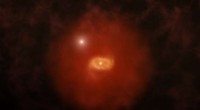
* Betelgeuse (Alpha Orionis): This is the brightest star in the constellation Orion and a popular example of a red supergiant. It's so large that if it replaced our Sun, its surface would extend past the orbit of Mars! It's expected to go supernova within the next 100,000 years.
* Antares (Alpha Scorpii): This is the brightest star in the constellation Scorpius and a close rival to Betelgeuse in size. It's also expected to explode as a supernova in the not-too-distant future.
* VY Canis Majoris: This is one of the largest known stars in the Milky Way, estimated to be 1,800 times the diameter of the Sun. It's so massive that its outer layers are being blown away, creating a huge cloud of gas and dust.
Blue Supergiants:
* Rigel (Beta Orionis): The brightest star in the constellation Orion, Rigel is a massive blue supergiant that shines with an incredibly intense blue light. It's about 79 times more massive than the Sun.
* Deneb (Alpha Cygni): This is the brightest star in the constellation Cygnus and a very luminous blue supergiant. It's estimated to be about 200 times the diameter of the Sun.
* Zeta Orionis: This is a very hot and bright star that resides in Orion's belt. It's believed to be about 20 times the mass of our Sun.
Other Supergiant Stars:
* Mu Cephei (Herschel's Garnet Star): A red supergiant in the constellation Cepheus, it's known for its beautiful deep red color.
* VY Canis Majoris: While often categorized as a hypergiant, its massive size and extreme luminosity place it among the most prominent supergiants.
Important Notes:
* Lifetimes: Supergiants are very short-lived stars, burning their fuel at an incredibly rapid rate. They typically live for only a few million years, compared to the billions of years that our Sun will live.
* Evolution: Supergiants are the evolved forms of massive stars that have exhausted their core hydrogen fuel. They will eventually explode as supernovae, leaving behind a neutron star or a black hole.
* Supernovae: The deaths of supergiants are spectacular events, releasing enormous amounts of energy and creating a powerful explosion that can outshine entire galaxies.
I hope this list gives you a good overview of some of the most fascinating supergiant stars in the universe.