Observational Tools:
* Telescopes:
* Optical Telescopes: These gather visible light from celestial objects. They can be ground-based (like the Very Large Telescope) or space-based (like the Hubble Space Telescope).
* Radio Telescopes: These detect radio waves emitted by objects in space. Examples include the Atacama Large Millimeter/submillimeter Array (ALMA) and the Very Large Array (VLA).
* Infrared Telescopes: These detect infrared radiation, allowing astronomers to see through dust clouds and study cooler objects. Examples include the Spitzer Space Telescope and the James Webb Space Telescope.
* Ultraviolet, X-ray, and Gamma-ray Telescopes: These specialize in detecting high-energy radiation, revealing phenomena like supernova explosions and black holes. Examples include the Chandra X-ray Observatory and the Fermi Gamma-ray Space Telescope.
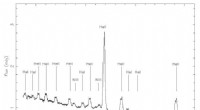
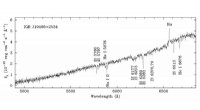
* Spectrographs: These instruments break down light into its component colors, providing information about the composition, temperature, and motion of celestial objects.
* Cameras: Digital cameras are used to capture images of celestial objects, often in conjunction with telescopes.
* Photometers: These devices measure the brightness of celestial objects.
* Interferometers: These combine signals from multiple telescopes to achieve higher resolution and sensitivity.
Computational Tools:
* Computers: Astronomers use powerful computers for data analysis, modeling, simulations, and visualization.
* Software Packages: Specialized software packages are used for tasks such as image processing, data analysis, and theoretical modeling.
* Databases: Astronomers rely on vast databases containing astronomical data, including catalogs of stars, galaxies, and other objects.
Other Tools:
* Spacecraft: Robotic spacecraft like Mars rovers and the Voyager probes explore planets and other celestial objects directly, sending back data and images.
* Rocket Launches: Astronomers use rockets to launch telescopes and other scientific instruments into space.
* Ground-Based Observatories: These facilities house telescopes, instruments, and supporting infrastructure.
Beyond the Tools:
* Collaboration: Astronomy is highly collaborative, involving scientists from diverse fields.
* Mathematical Modeling: Astronomers use mathematical models to understand and predict celestial phenomena.
* Theoretical Frameworks: Theories like general relativity and the standard model of particle physics provide frameworks for understanding the universe.
The tools and techniques used by astronomers are constantly evolving, allowing them to probe deeper into the mysteries of the cosmos.