Formation:
* Accretion: Like all planets in our solar system, Venus formed from a swirling disk of dust and gas surrounding the young Sun. Over millions of years, these particles clumped together, gradually growing into a planet.
* Volcanic Activity: Early in its history, Venus underwent intense volcanic activity, spewing vast quantities of lava that shaped its surface. This early volcanism contributed to the dense atmosphere we see today.
Current Appearance:
* Thick Atmosphere: Venus's atmosphere is incredibly dense, composed primarily of carbon dioxide with thick clouds of sulfuric acid. This atmosphere traps heat, leading to a runaway greenhouse effect and surface temperatures hot enough to melt lead.
* Yellowish-White Color: The sulfuric acid clouds reflect sunlight, giving Venus its characteristic yellowish-white color.
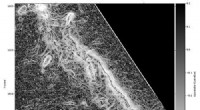
* No Surface Features Visible: Due to the dense clouds, we can't see Venus's surface directly from Earth. Telescopes and spacecraft equipped with radar have revealed a landscape dominated by volcanoes, mountains, and vast plains.
* No Moon: Venus doesn't have a moon.
Key Points to Remember:
* Venus is the hottest planet in our solar system.
* Its thick atmosphere traps heat, creating an extreme greenhouse effect.
* Its surface is hidden from view by thick clouds.
Overall, Venus's appearance is a result of its unique history and composition, making it a truly fascinating and mysterious world.