Here's how:
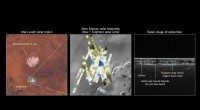
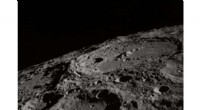
* Clementine used radar to map the surface of the Moon. This revealed information about the topography and composition of the lunar surface.
* Clementine also measured the gravitational field of the Moon. This data, combined with surface topography data, helped scientists understand the distribution of mass within the Moon.
* By analyzing the differences in gravitational field and surface topography, scientists could infer the thickness of the Moon's crust. Areas with lower gravity compared to their topography suggested a thinner crust, while areas with higher gravity suggested a thicker crust.
Therefore, Clementine's contribution to understanding the thickness of the Moon's crust was indirect, but significant. It provided crucial data that helped scientists develop models and estimations of the lunar crust's structure.