Physical Properties:
* Temperature: By analyzing the color of light emitted by a star, scientists can determine its surface temperature. Hotter stars tend to be bluer, while cooler stars are redder.
* Luminosity: Telescopes allow astronomers to measure the total amount of light a star emits, giving them an idea of its intrinsic brightness.
* Size: Combining luminosity and temperature measurements, scientists can estimate a star's size (radius).
* Composition: Analyzing the spectrum of light from a star reveals the elements present in its atmosphere and their relative abundance.
* Mass: Studying the movement of binary star systems (two stars orbiting each other) allows astronomers to calculate the masses of the stars.
Evolutionary Stages:
* Age: By studying the star's color, luminosity, and composition, scientists can determine the stage of its life cycle, giving them an idea of its age.
* Evolutionary Path: Observing stars at different stages of their lives allows astronomers to piece together how stars evolve over time.
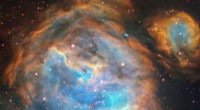
* Formation: Telescopes can observe star-forming regions, like nebulae, revealing the process of how stars are born.
Other Information:
* Distance: Using techniques like parallax and standard candles, telescopes help astronomers determine the distance to stars.
* Motion: Studying the Doppler shift of light from stars allows scientists to determine their radial velocity (motion toward or away from Earth).
* Magnetic Fields: Telescopes equipped with special instruments can study the magnetic fields of stars, which can influence their activity and evolution.
* Planets: Telescopes are used to search for and study planets orbiting stars.
Specialized Telescopes:
* Space telescopes like Hubble provide images and data unhindered by Earth's atmosphere, allowing for clearer views of distant stars.
* Radio telescopes can observe wavelengths of light invisible to the human eye, revealing information about star formation and the interstellar medium.
Overall, telescopes are essential tools for astronomers to unlock the mysteries of stars, providing insights into their physical properties, evolution, and role in the universe.