* Mercury: The smallest planet and closest to the Sun.
* Venus: The hottest planet and Earth's closest neighbor.
* Earth: Our home planet, the only known planet to harbor life.
* Mars: The "Red Planet," known for its rusty color.
* Jupiter: The largest planet, a gas giant with a swirling atmosphere.
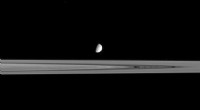
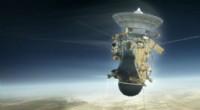
* Saturn: Known for its spectacular ring system.
* Uranus: An ice giant with a tilted axis.
* Neptune: The furthest planet from the Sun, also an ice giant.
There are also many other celestial objects in space, including:
* Dwarf Planets: These are celestial bodies that orbit the Sun but haven't cleared their neighborhood of other objects. Pluto is the most famous dwarf planet.
* Moons: Natural satellites that orbit planets. Earth has one moon, while other planets have many.
* Asteroids: Rocky bodies mostly found in the asteroid belt between Mars and Jupiter.
* Comets: Icy bodies that orbit the Sun in elliptical paths.
* Stars: Giant balls of hot gas that emit light and heat. Our Sun is a star.
This is just a brief overview, and the universe is full of many other fascinating objects waiting to be discovered!