Shape:
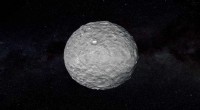
* All planets are roughly spherical. This is due to their own gravity pulling matter towards their center, creating a nearly uniform, round shape.
* Planets aren't perfectly smooth spheres. They have slight bulges at their equators due to their rotation.
Size:
Here's a table comparing the planets by diameter (at the equator):
| Planet | Diameter (km) | Diameter (miles) |
|---|---|---|
| Mercury | 4,880 | 3,032 |
| Venus | 12,104 | 7,521 |
| Earth | 12,756 | 7,926 |
| Mars | 6,792 | 4,220 |
| Jupiter | 142,984 | 88,846 |
| Saturn | 120,536 | 74,898 |
| Uranus | 51,118 | 31,763 |
| Neptune | 49,528 | 30,775 |
Additional Notes:
* Gas Giants vs. Terrestrial Planets: The gas giants (Jupiter, Saturn, Uranus, Neptune) are significantly larger than the terrestrial planets (Mercury, Venus, Earth, Mars).
* Dwarf Planets: There are also dwarf planets, like Pluto, which are smaller than the eight major planets and don't meet all the criteria for planet classification.
Let me know if you'd like more information about any particular planet!